Professional Summary
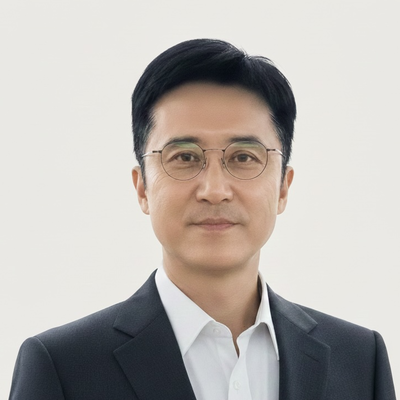
Yongdae Kim (IEEE Fellow) is a Professor in the Department of
Electrical Engineering and the Graduate School of Information
Security at KAIST, where he holds the KAIST ICT Endowed Chair
Professorship and is a member of the National Academy of Engineering
of Korea. He received his PhD in Computer Science from the University
of Southern California in 2002 and was on the faculty at the University
of Minnesota until 2012. He previously served as Chair Professor at KAIST
(2013–2016) and Director of the KAIST Cyber Security Research Center
(2018–2020). He currently serves as the steering committee chair for
NDSS and has chaired major conferences including ACM CCS and ACM
WiSec. His research focuses on discovering and analyzing security
vulnerabilities in emerging systems such as cellular networks, drones,
and autonomous vehicles.
Education
PhD Computer Science
1998-09-01
2002-05-30
University of Southern California
MS Mathematics
1991-03-01
1993-02-28
Yonsei University
BS Mathematics
1987-03-01
1991-02-28
Yonsei University
Interests
Cellular Security (LTE, 5G, 6G, …)
Drone Security
Security of Self-driving Card
CPS Security
📚 My Research
My research focuses on discovering and analyzing security vulnerabilities in emerging systems such as cellular networks, drones, and autonomous vehicles.
Current Research Interests:
- Cellular Network Security (4G/5G/6G)
- Autonomous Vehicle Security
- Drone Security
- Security Research using ML
Past Research Interests: Blockchain Security • IoT Security • Embedded Systems Security • Network Protocol Analysis • Wireless Security • Applied Cryptography • Anonymity • Privacy • Mobile Security • Sensor Security • Software Security • System Security
Publications
(2025).
CITesting: Systematic Testing of Context Integrity Violations in LTE Core Networks.
Proceedings of the 2025 ACM SIGSAC Conference on Computer and Communications Security, CCS 2025, Taipei, Taiwan, October 13-17, 2025.
Impact: We uncovered 29, 22, 16, and 59 distinct CIVs in Open5GS, srsRAN, Amarisoft, and Nokia LTE cores, respectively. These allow remote detachment, IMSI exposure, and presence detection without requiring proximity. We contributed patches to Open5GS and Amarisoft. CITesting will be released as an open-source tool to support future uplink security research.
(2025).
FirmState: Bringing Cellular Protocol States to Shannon Baseband Emulation.
18th ACM Conference on Security and Privacy in Wireless and Mobile Networks, WiSec 2025, Arlington, VA, USA, 30 June 2025- 3 July 2025.
(2025).
LLFuzz: An Over-the-Air Dynamic Testing Framework for Cellular Baseband Lower Layers.
34th USENIX Security Symposium, USENIX Security 2025, Seattle, WA, USA, August 13-15, 2025.
Impact: LLFuzz uncovered 11 previously unknown vulnerabilities across 15 commercial smartphones from major vendors including Qualcomm, MediaTek, Samsung, and Apple. Seven of these vulnerabilities have been assigned CVE identifiers and patched by vendors, while four remain undisclosed due to patch delays. The CVEs include: itemize Qualcomm: CVE-2025-21477, CVE-2024-23385 – affecting over 90 chipsets. MediaTek: CVE-2024-20076, CVE-2024-20077, CVE-2025-20659 – affecting over 80 chipsets. Samsung: CVE-2025-26780 – affecting Exynos 2400 series and Modem 5400. Apple: CVE-2024-27870 – equivalent to CVE-2025-21477 in Qualcomm modems. itemize LLFuzz revealed systemic flaws in how lower-layer baseband logic is implemented across vendors. In one test, a single malformed MAC-layer packet immediately disabled a device during data streaming. These results demonstrate that lower layers remain a blind spot in mobile security. LLFuzz is open-sourced at https://github.com/SysSec-KAIST/LLFuzz.
(2025).
Passive 3-D User Equipment Tracking Using Long-Term Evolution Uplink Signals.
IEEE Trans. Instrum. Meas..
(2025).
Revisiting GPS Spoofing in Phasor Measurement: Real-World Exploitation and Practical Detection in Power Grids.
ACM Trans. Priv. Secur..
Experience
ICT Chair Professor
KAISTMember
National Academy of Engineering of KoreaFellow
IEEEHead
Police Science and Technology Research Center, KAISTProfessor
School of Electrical Engineering, KAISTProfessor (Joint Appointment)
Graduate School of Information Security, KAISTHead
Cyber Security Research Center, KAISTKAIST Chair Professor
KAISTAssistant/Associate Professor
Dept. of Computer Science, University of Minnesota, Twin CitiesMcKnight Land-Grant Professor
KUniversity of Minnesota, Twin CitiesVisiting Researcher
UC IrvineMember of Research Staf
Electronics and Telecommunication Research Institute
Education
PhD Computer Science
University of Southern CaliforniaMS Mathematics
Yonsei UniversityBS Mathematics
Yonsei University
Awards & Honors
Academic Honors
- Member, National Academy of Engineering of Korea (2025)
- KAIST ICT Chair Professor (2025–Present)
- IEEE Fellow (2024)
- KAIST Chair Professor (2013–2015)
- McKnight Land-Grant Professorship, University of Minnesota (2006)
- NSF CAREER Award (2005)
Best Paper Awards
- Distinguished Paper Award, ACM CCS 2025
- Best Paper Award, ACM WiSec 2016
Teaching Excellence
- Best Lecture Award, KAIST Electrical Engineering (2022)